The crew behind the care: an interview with Goughs Solicitors and Wiltshire and Bath Air Ambulance Charity
Wednesday, 23 September 2026

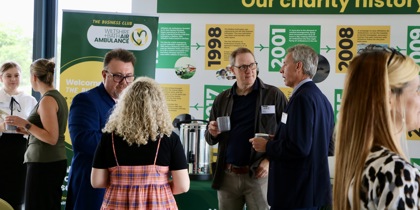
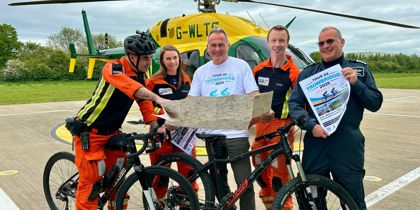
In 2026, Goughs Solicitors named Wiltshire and Bath Air Ambulance Charity as their Charity of the Year. Since April, the Goughs Solicitors team have raised £4,000 and we have been amazed at the creativity of their support, from triathlons, to dress down days and even a skydive! Through the partnership, we’ve also been delighted to welcome the team in for tours around our airbase, celebrating their efforts and showing them exactly how their support helps us to provide our lifesaving service.
Inspired to share behind-the-scenes with a wider audience, marketing executive, Ollie James, interviewed our specialist critical care paramedic, Craig Wilkins, and pilot Simon Gough MBE here at the airbase.
Craig, what was our experience going into specialist care?
I always wanted to help people. I wasn't entirely sure which one of the emergency services I wanted to do that through until I was in my early teens. I realised that seeing people who were poorly and doing something positive about it was a really lovely thing to be able to do for someone in their moment of need.
How important is communication that everything is moving quickly?
Very important. One of the key things we do is trying to slow a scene down. That probably sounds counterintuitive because of course what we do is very quick, but ‘less haste, more speed’ is often something we try and remind ourselves. A lot of the things we do are to just bring calm and order. When we're stressed, one of the first things to go is our hearing. So if we can bring some order back to the scene, have a lovely chat with people and try and humanise things again, it tends to make things flow much better.
How do you and the pilot work together during a mission?
We've got a nice symbiotic relationship, so we're really close to the pilots who are responsible for flying the aircraft. My job is to help navigate to the scene safely and try and find somewhere to land. We work as a two-person crew in the cockpit and we train thoroughly throughout the year.
And lastly, what does it mean to you knowing the public directly support the care you give?
It's a weird but lovely pressure because someone's putting their hard-earned money, their pocket money, or whatever it might be, towards this service. I'm really lucky as crew that if a patient needs the service, I get to deliver the care to the patient and I don't have to worry about the cost of it. But I know that the team in the Charity office are working hard. Every time the aircraft goes out, they're having to work hard to try and raise that money.
With that in mind, there's a lovely ownership to our work. Whenever we land somewhere in Wiltshire or Bath, you won't be five paces away from someone who's donated or been involved with the air ambulance in some way. I think there is really lovely community feel to it as a result.
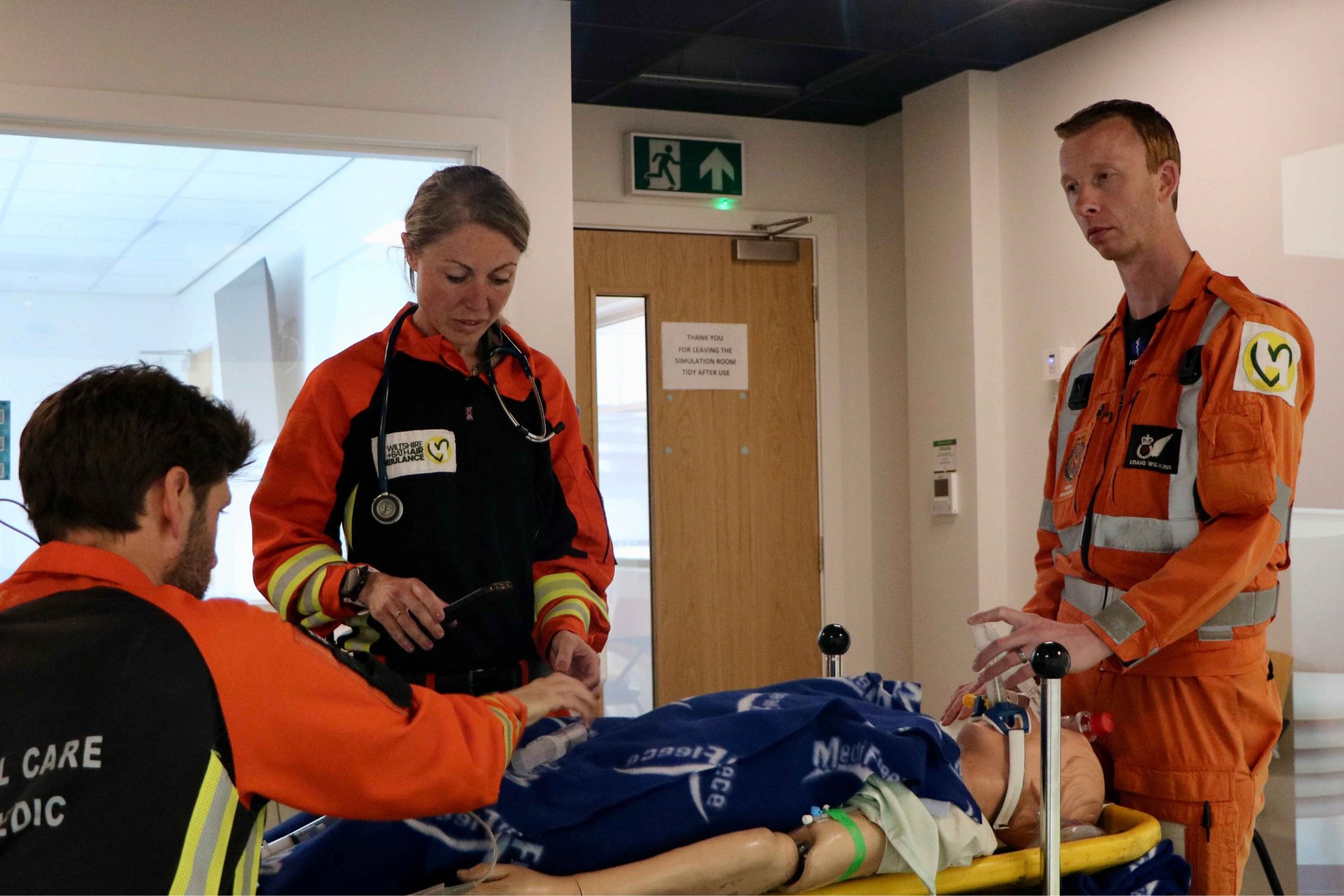
Left to right: Ben, Dolly and Craig training in the simulation room at our airbase.
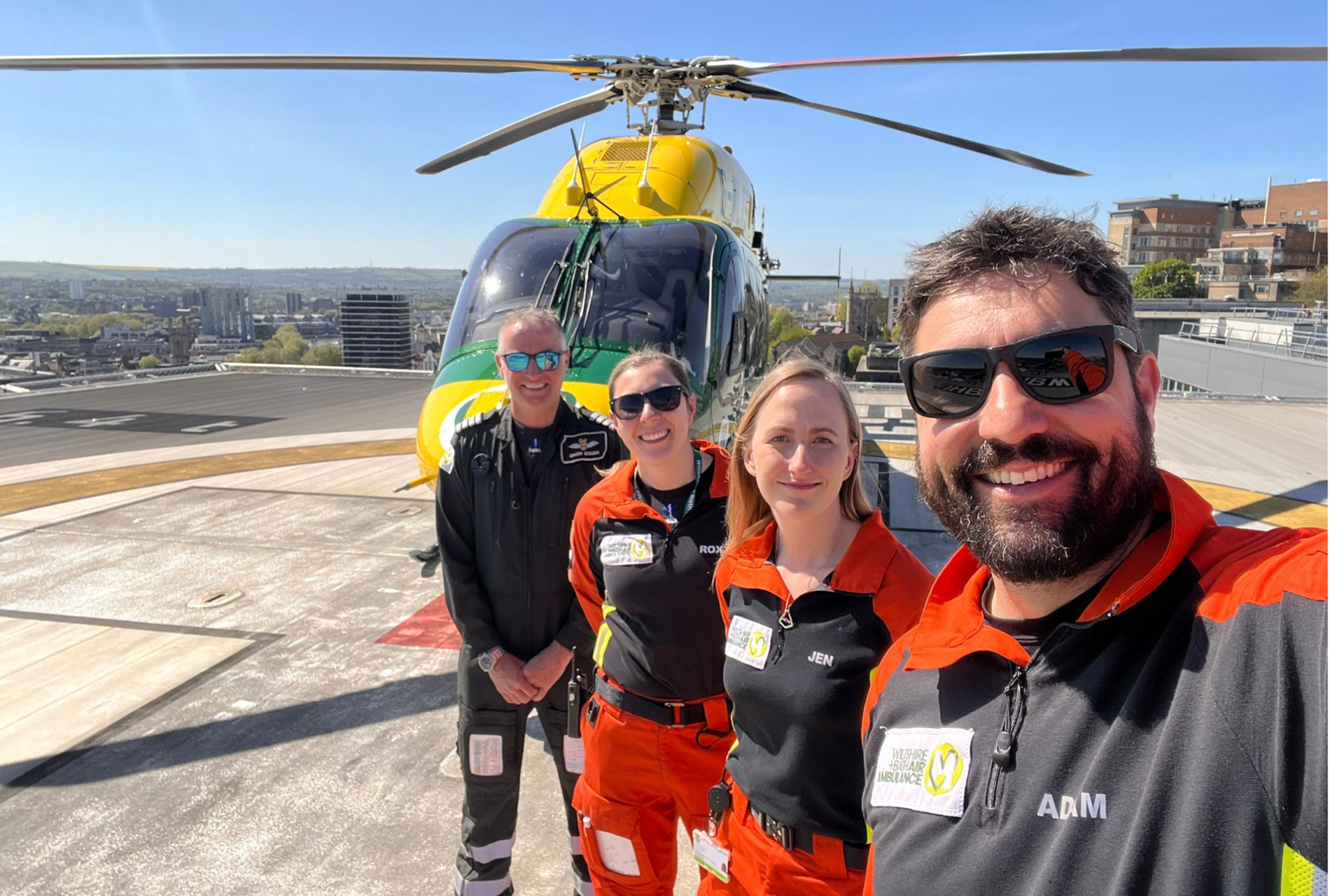
Left to right: Simon, Roxy, Jen and Adam at the Bristol Royal Infirmary helipad.
Simon, you spend nearly 30 years in the army. What pulled you towards flying in the first place?
I've always had a love for flying and used to visit plenty of airfields as a child with my parents, so it was something I always had a passion for. When I joined the military, I didn't fly straight away. I did about eight years in the communications world and then the Army, who I flew with for 20 years.
How different is flying a military helicopter versus an air ambulance mission?
The aircraft flying is very, very similar in terms of the switches, the levers, the way the aircraft physically flies, but the style of flying is very different. This environment is very controlled. The rules are extremely tight on where you can land and how you can land in the military. The missions are very different, but there are also a lot of similarities such as the night vision goggles.
What's going through your mind when a call comes in?
For me, it's about aviation safety and getting the crew safely to the scene. The minute the call comes in, I may or may not know where we're going. My priority is to get out, to safely start the aircraft and to get us flying in the right direction as quickly as I can. The next bit is landing safely and then helping the crew out on scene, or not, depending on where we've landed. Then finally getting them home safely, possibly via the hospital for the patient.
What role does teamwork play between you and the medical group?
Teamwork is everything, especially on those jobs where I get involved on scene. I help collect kit for them, but we say ‘One Base, One Team’ here, and that's very much how we operate. There's only three of us, possibly four of us on a mission. So, everyone has to play their part and teamwork is the very centre of that.
Lastly, what does it mean to see local businesses and communities get behind the charity?
It's incredibly important to us and it's incredibly privileged. A lot of these businesses that support us here, I know intimately as I only live a few miles from the base. I've used Goughs Solicitors in the past and other such local businesses that support us. It’s really important and we are delighted to have local businesses on board.