How multidisciplinary training helps emergency services save lives
Wednesday, 20 May 2026

How do emergency responders prepare for the most complex incidents?
Alongside their qualifications and ongoing clinical training, our crew take part in multidisciplinary training each year with colleagues across emergency services.
These exercises bring together specialist emergency services to practise working side by side in realistic, high-pressure scenarios. By training together before real emergencies happen, crews can improve communication, coordination and decision-making when every second counts.
Most recently, Wiltshire and Bath Air Ambulance Charity joined colleagues from the Hazardous Area Response Team (HART), Dorset & Wiltshire Fire and Rescue Service, and South Western Ambulance Service for a specialist training day at Swindon Fire Station.
The purpose of the day was to practise managing critically ill and injured patients in challenging simulated incidents, helping all services refine their response to complex emergencies.
Three immersive scenarios were created to reflect real-life incidents previously attended by emergency crews, giving participants the opportunity to apply their skills in realistic and demanding environments.
These included:
-
A house fire, requiring rescue by fire crews, followed by treatment for severe burns and breathing difficulties.
-
A road traffic collision, requiring specialist extraction and advanced patient care.
-
A medical emergency, involving CPR and rescue from height.
Each scenario was designed to strengthen inter-agency coordination and improve how teams work together during high-pressure incidents.
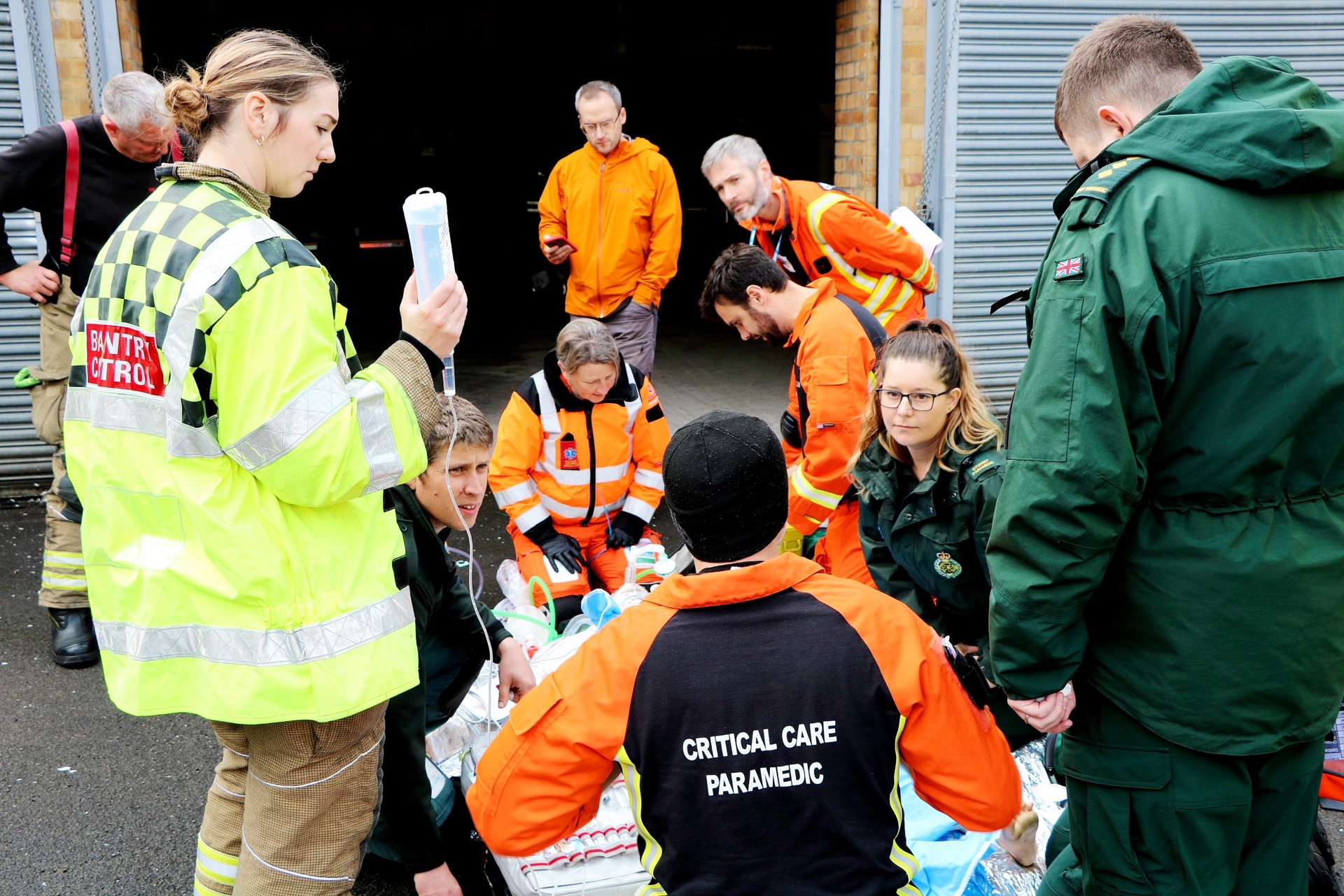
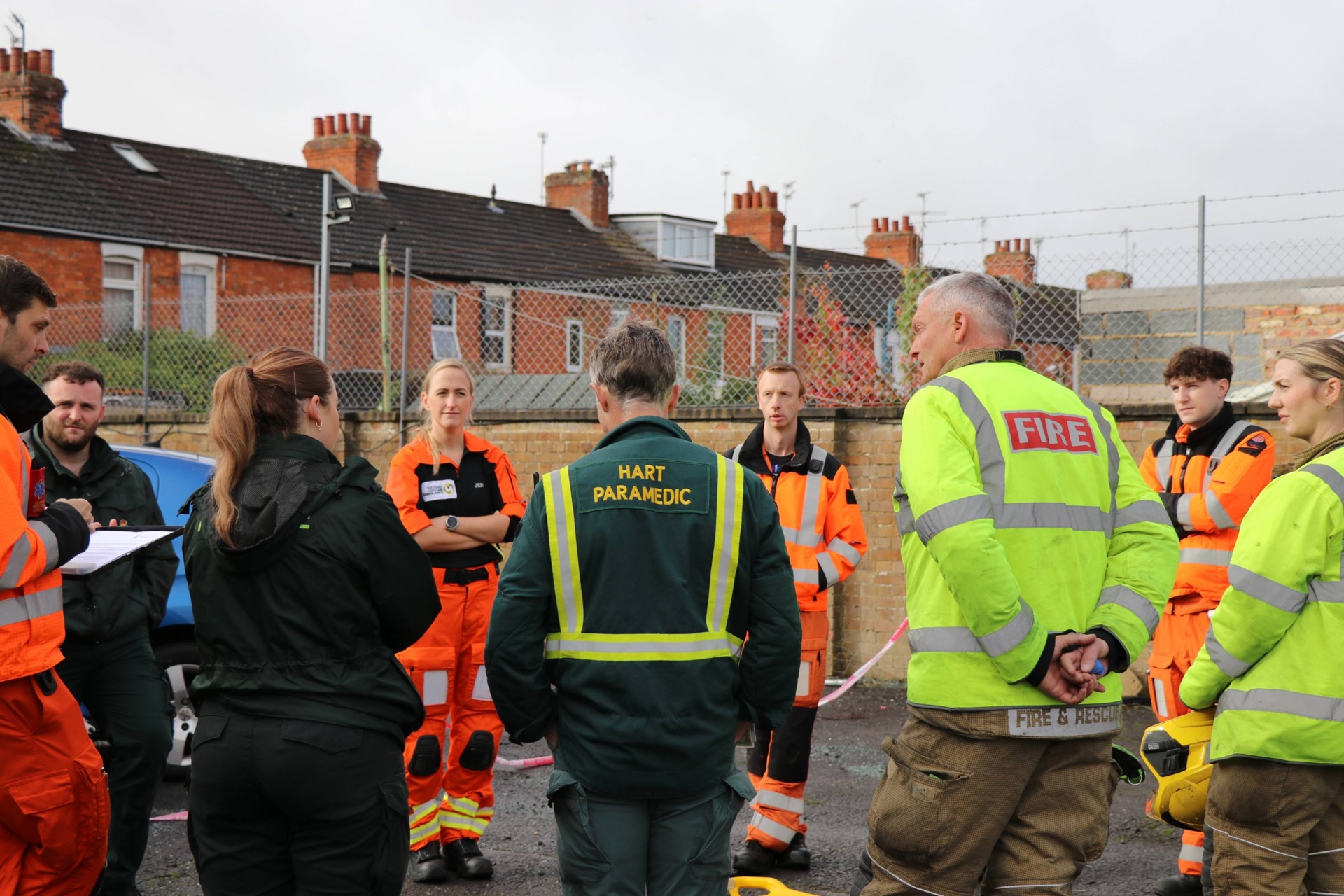
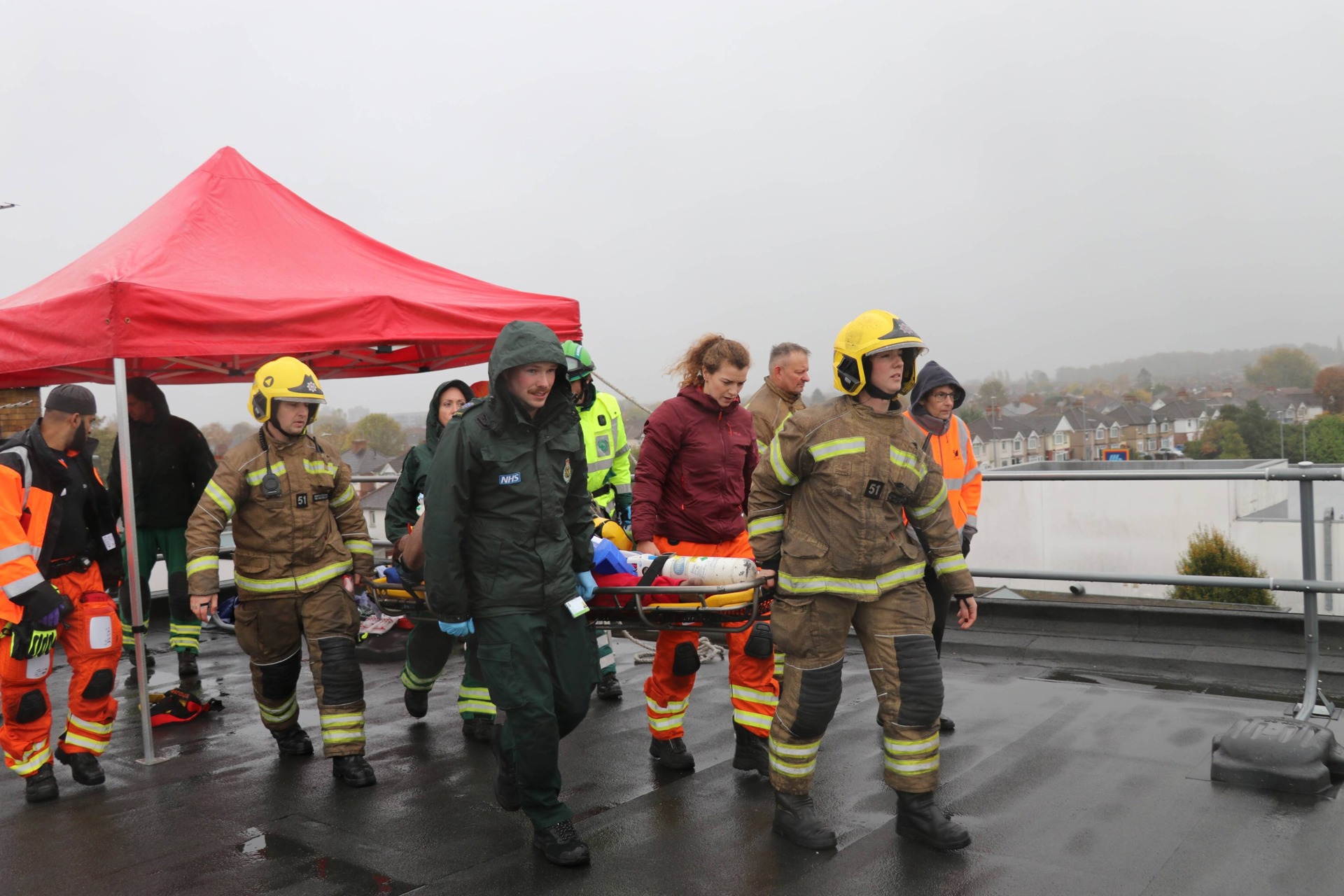
While emergency responders are trained to collaborate at the scene, exercises like this provide a valuable opportunity to practise those skills in advance. Building familiarity between teams helps improve efficiency, communication and teamwork during real emergencies. After each 30-minute scenario, participants took part in debrief sessions to reflect on performance, consolidate learning and identify opportunities for improvement.
The day also included a surgical procedures station, allowing each service to observe specialist interventions in a simulated environment and gain a deeper understanding of one another’s capabilities.
"Multi-agency training with the Fire and Ambulance services helps the team at Wiltshire and Bath Air Ambulance work more effectively together during complex incidents. Practising real-life scenarios improves communication, builds trust between crews, and helps ensure emergency responses are as smooth and effective as possible."
- Matt Metcalf, specialist critical care paramedic
A Dorset & Wiltshire Fire and Rescue Service spokesperson said: “The crews also had the opportunity to see roadside operations being performed in a simulated environment, working together and learning about each team’s capabilities. It was a great learning day for all involved.”
The lessons learned in training will help crews deliver faster, safer and more coordinated care to patients during real-life emergencies. Training like this plays a vital role in helping our crew provide the highest standard of pre-hospital critical care when people need us most.
Thank you to Dorset & Wiltshire Fire and Rescue Service for hosting the day, and to everyone involved.