Behind-the-scenes at an emergency services significant incident training day
Tuesday, 22 September 2026

As part of our commitment to train for major and significant incidents, we recently organised and hosted our second multi-agency training day at Severn Park Fire and Rescue Training Centre in Bristol.
We were also recently joined by South Western Ambulance Service NHS Foundation Trust (SWAST) leads for significant incident planning and colleagues across fire and rescue crews, land ambulance teams and Hazardous Area Response Team (HART).
Organised by one of our critical care doctors, Jono Holme, the day explored developing skills and preparing for technical, but realistic, scenarios.
Jono explained: “It is our second year running this training day, and it provides an invaluable opportunity for the clinical teams to work together. When the phone rings, we never know what emergency we will be called to, so our crew continuously train together to ensure we’re bringing the highest levels of critical care to the most unwell people in Wiltshire and Bath.
“For this training day, the focus was significant incidents, which is where multiple resources, specialist teams and dedicated command is needed. By practicing in this environment, we bring emergency services colleagues together, ensuring that communication and logistics are front and centre of considerations, ultimately improving patient care when it matters in real-life.”
The simulations
Significant incidents are emergencies that cannot be managed through routine arrangements and may need many resources, specialist teams and dedicated command. They may involve several casualties, but numbers alone do not tell the whole story. Location, hazards, access, and the type of specialist help needed can all change the response.
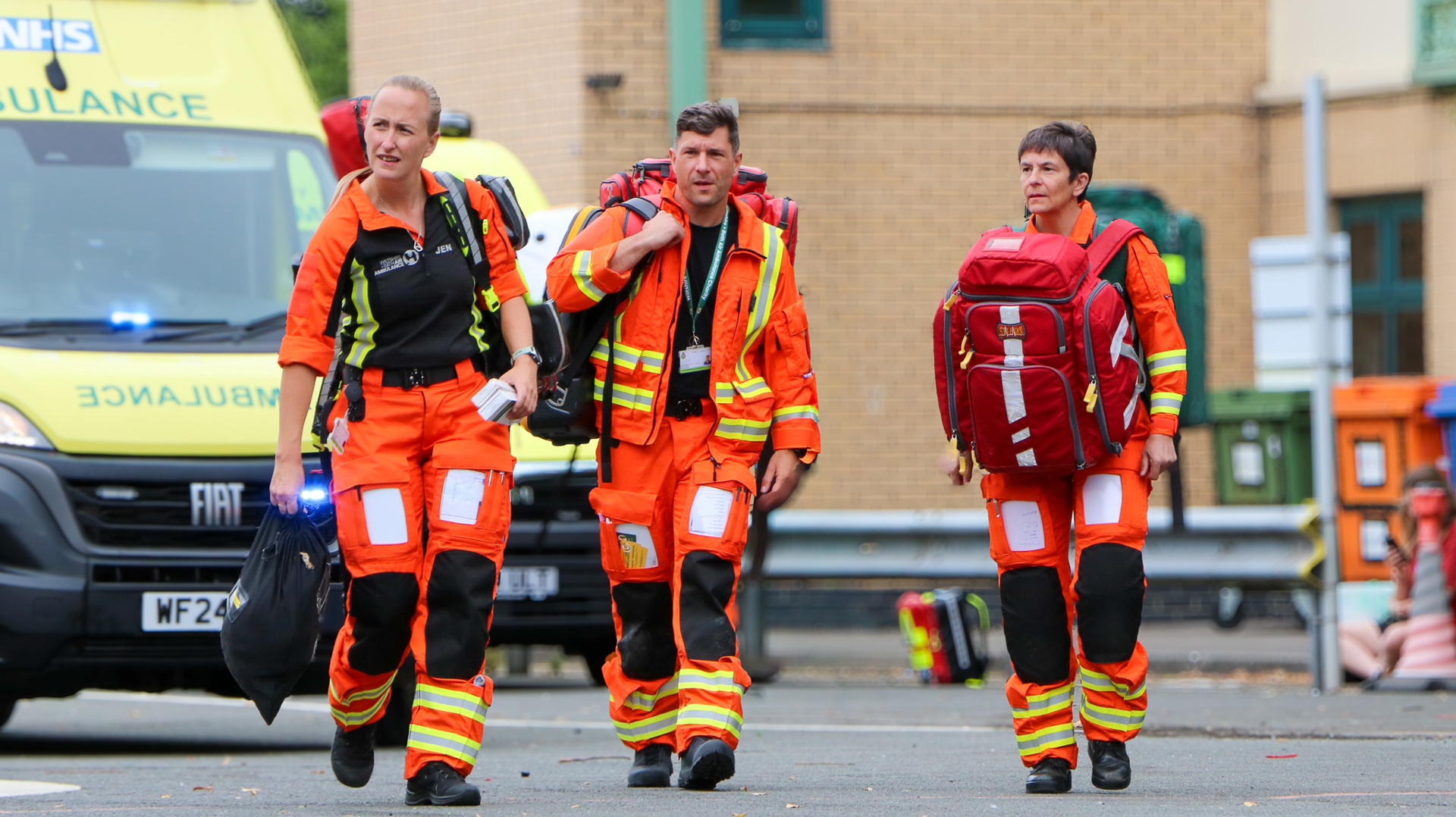
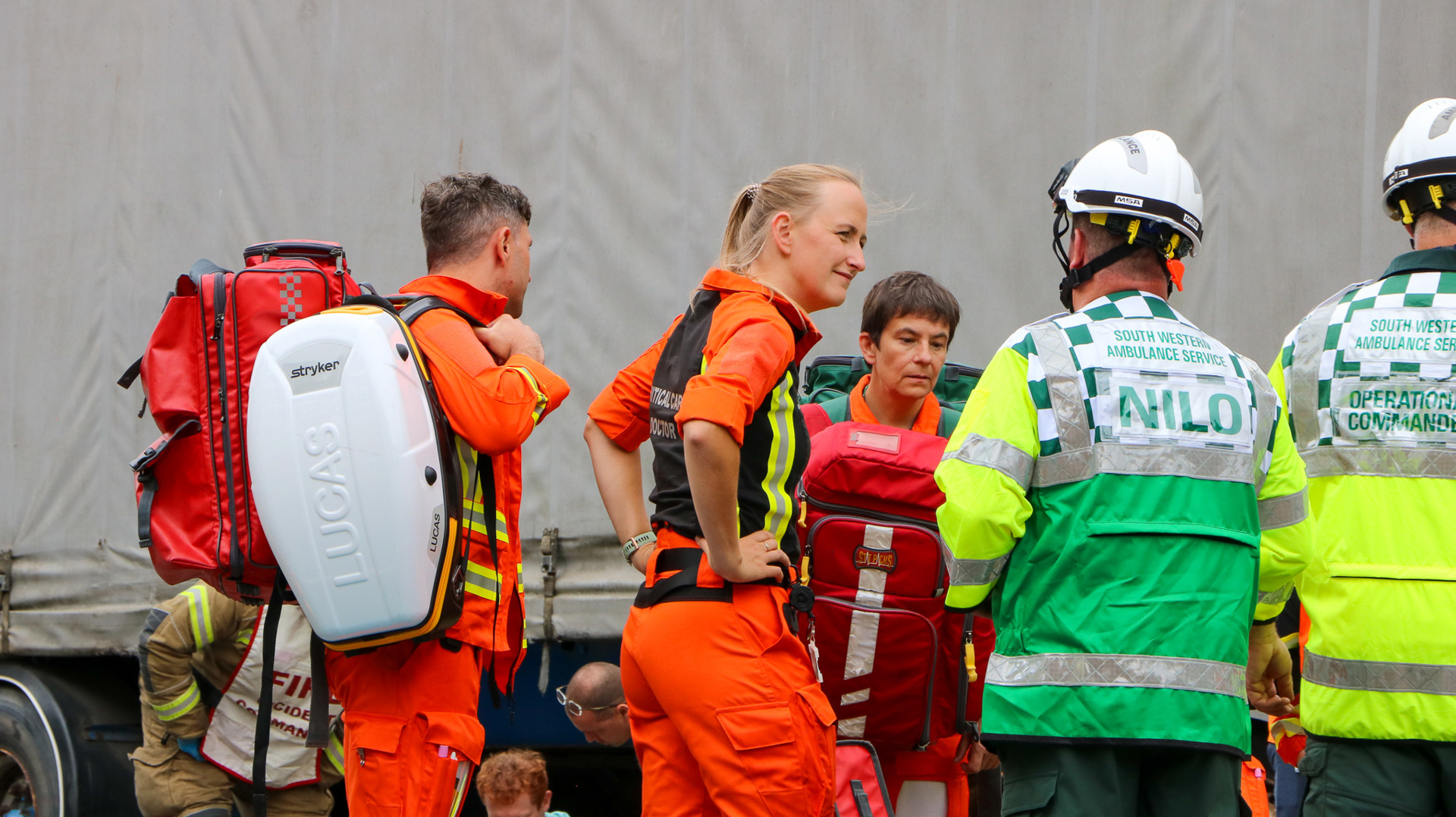
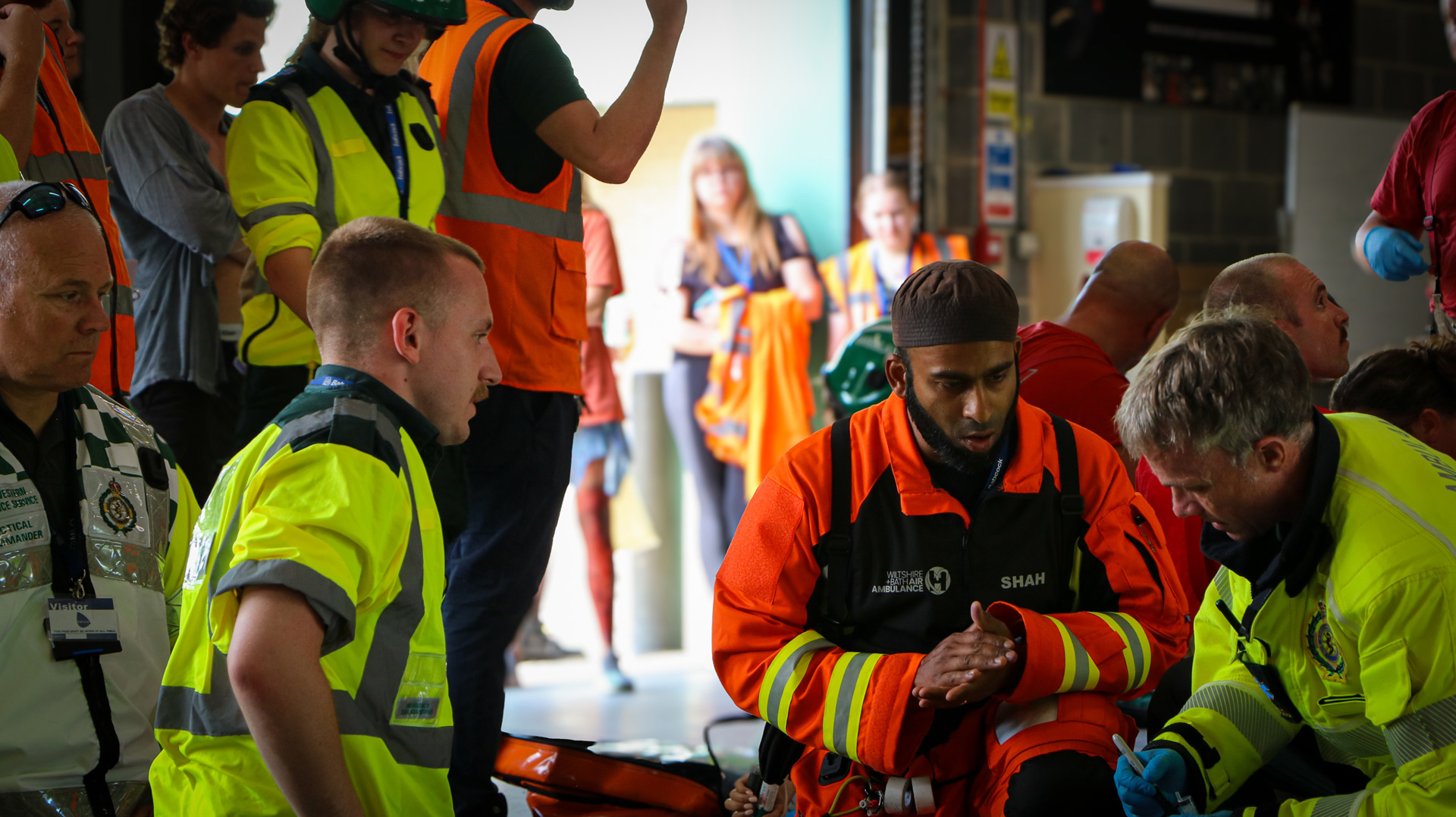
Two large simulations gave teams the chance to work side by side. The first recreated a complex road traffic collision involving four vehicles and approximately a dozen casualties. Fire and land ambulance teams arrived first, followed by HART and Wiltshire and Bath Air Ambulance crew, reflecting how resources may build at a real scene.
The second scenario created a different challenge. Patients emerged over time, and some who first appeared stable became more unwell. New casualties demanded attention, while teams still needed to reassess and care for those already on scene.
Equipment was limited on purpose. Training bags and monitors had to be shared, patient movement needed planning and crews had to make decisions with the resources available. The aim was not to catch anyone out, but to create the conditions for real-life situations.
Beyond the simulations
Learning didn’t stop when the simulations did. Instead, the teams came together to discuss the incidents and share learnings. One of the clearest lessons was the importance of continuous reassessment. At a busy scene, a patient who appears stable can deteriorate while attention moves elsewhere. This highlights the essential nature of clinical oversight. Teams need a clear way to raise concerns, update priorities and make sure no patient becomes lost in the wider incident.
The debrief also looked beyond clinical interventions. Where should casualties be assessed? How can teams create a clear flow through the scene? Is there enough room to reach every patient? How far will someone need to be carried?
These practical questions can quickly affect patient care, so considering these before an emergency can help teams put the patients’ needs front and centre. A treatment area or ‘corridor of care’ may improve visibility and access, but only if it works at the scale of the incident. Movement over distance can be demanding, specialist rescue may be needed and limited kit must be placed where it can make the greatest difference.
Why training together matters
As an air ambulance Charity, our work involves working closely with other emergency services. Joint exercises help colleagues understand each other’s roles, language, equipment and constraints before they meet in a real emergency.
They also create space to ask difficult questions. Who has the whole-scene picture? How are decisions shared? When should an incident be escalated or de-escalated? How do we keep patients informed while teams work around them?
The day ended with thanks to everyone who planned, supported and took part. The simulations were complex, the discussions were open and the commitment across every team was clear.
Our aircrew are on call every day for up to 19 hours and respond to an average of three incidents daily, attending by helicopter or critical care cars. When a scene is complex, strong partnerships help every service move quickly, communicate clearly and give patients the best possible care.